





Europejski Trybunał Praw Człowieka w swoim postanowieniu wydanym 6 marca jednogłośnie przez skład trzech sędziów w sprawie Călin Georgescu przeciwko Rumunii (wniosek nr 37327/24), uznał skargę wnioskodawcy za niezasadną. Decyzja jest ostateczna.
Sprawa dotyczy unieważnienia przez Sąd Konstytucyjny Rumunii wyborów prezydenckich z 2024 r., w których kandydatem był Călin Georgescu.
Călin Georgescu, jako kandydat niezależny w wyborach prezydenckich w 2024 r. prowadził intensywną kampanię w serwisie internetowym TikTok. Większość przedwyborczych sondaży nie rokowała mu sukcesu. Ostatecznie jednak w pierwszej turze 24 listopada otrzymał 22,94% głosów, zajmując 1. miejsce spośród 14 kandydatów. Przeszedł do drugiej tury, w której jego konkurentką została Elena Lasconi z USR (19,18% głosów).
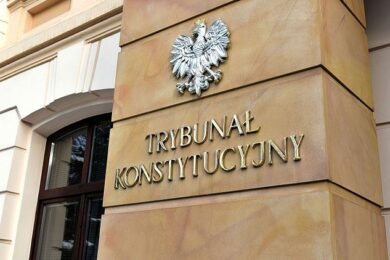
6 grudnia 2024, dwa dni przed planowaną drugą turą głosowania, Sąd Konstytucyjny w składzie 9 sędziów, unieważnił cały proces wyborczy, nakazując jego powtórzenie. Decyzję tę uzasadniono stwierdzonymi zewnętrznymi ingerencjami w wybory – krajowe służby specjalne wskazały, że Rumunia przed pierwszą turą stała się celem agresywnych rosyjskich ataków hybrydowych (co miało wpłynąć na nadspodziewanie dobry wynik Călina Georgescu).
Georgescu złożył skargę na wyrok Sądu Konstytucyjnego w Europejskim Trybunale Praw Człowieka.
6 lutego Trybunał orzekł (w szczególności), że w świetle konstytucyjnej struktury władz Rumunii nie było żadnych przesłanek wskazujących na to, że uprawnienia Prezydenta Rumunii czynią z tego urzędu część „legislatury” państwa pozwanego, w rozumieniu artykułu 3 Protokołu nr 1 do Konwencji, gwarantującego prawo do wolnych wyborów. Dlatego też oddalił skargę wniesioną w tym zakresie.
Stwierdzono również, że Rumunia nie ma podstaw do udzielenia odpowiedzi na podstawie artykułów 6 (prawo do rzetelnego procesu), 10 (wolność wypowiedzi), 11 (wolność zgromadzeń i zrzeszania się) i 13 (prawo do skutecznego środka odwoławczego).
Komunikat prasowy (w jęz. angielskim)
Principal facts
The applicant, Călin Georgescu, is a Romanian national who was born in 1962 and lives in Mogosoaia (Romania). On 24 November 2024 the first round of the presidential elections took place in Romania, with the second round due to have been on 8 December 2024. Mr Georgescu was a candidate and reached the runoff.
On 6 December 2024 the Constitutional Court of Romania annulled the entire election process (decision no. 32 of 6 December 2024), unanimously and pursuant to Article 146 (f) of the Constitution. It held that its role, under Article 146 (f) of the Constitution, was to ensure the compliance with the procedure for the presidential elections, and it found that, with reference to declassified information from the Supreme Council of National Defence (Consiliul Suprem de Apărare a Ţării) concerning State and non-State actors attempts to influence the election, that the electoral process had been vitiated from the outset. The irregularities discovered had distorted the free character of the citizens’ vote, had affected the fair and transparent electoral campaign, and had violated the rules concerning its financing. The Constitutional Court ordered that the elections should be reorganised from the beginning by the Government on a future date. That decision was final.
Romania has since set a new date for the first round of the election: 4 May 2025.
Complaints, procedure and composition of the Court
The application was lodged with the European Court of Human Rights on 16 December 2024.
Relying on Article 3 of Protocol No. 1 to the Convention (right to free elections), Mr Georgescu complained that the Constitutional Court’s annulment of the entire presidential election process had been based on unsubstantiated accusations and had been unlawful and disproportionate.
Relying on Articles 6 (right to a fair trial) and 13 (right to an effective remedy), Mr Georgescu also complained that the decision had been adopted in a non-transparent manner and that he had no remedy to challenge it.
Lastly, relying on Articles 10 (freedom of expression) and 11 (freedom of assembly and association), Mr Georgescu alleged that this decision had been the result of political interference by “the ruling party” in charge of the electoral process and that it had undermined the freedom to participate in democratic process.
On 21 January 2025 the Court, sitting in a Chamber formation, decided not to issue interim measures in the case as had been requested by Mr Georgescu.
The current admissibility decision was given today by a Committee of three judges, composed as follows:
Jolien Schukking (the Netherlands), President,
Faris Vehabović (Bosnia and Herzegovina),
Lorraine Schembri Orland (Malta),
and also Simeon Petrovski, Deputy Registrar.
Decision of the Court
Article 3 of Protocol No. 1
The Court reiterated that the obligations imposed on the Contracting States by Article 3 of Protocol No. 1, according to which member States undertook “to hold free elections … under conditions which w[ould] ensure the free expression of the opinion of the people in the choice of the legislature”, did not normally apply to the election of a Head of State, unless it had been established in the light of the constitutional structure of the State in question that the latter had such powers that he or she could arguably be considered to be part of the “legislature” – a finding which the Court had never made in any previous case to date.
It noted that Article 61 § 1 of the Romanian Constitution, which set out the separation of powers, provided that Parliament was the sole legislative authority in the country. It further observed from the provisions of national law that the President of Romania was vested with few powers that could be construed, to a limited extent, as an institutional interaction with the legislature, but was not part of it. For the Court, the President’s power was accessory to the Parliament’s legislative power – such as signing and temporarily delaying the promulgation of laws passed by the Parliament, but under strictly limited conditions – and was not a competence pertaining to the proper act of lawmaking. It had to be construed as being necessary and strictly limited to the system of the inter-institutional “checks and balances”, common to most European democracies.
Given that it could find no indication that the presidency was part of the “legislature” of Romania, within the meaning of Article 3 of Protocol No. 1 to the Convention, the Court rejected this part of the application as incompatible ratione materiae with the provisions of the Convention.
Articles 6 and 13
The right in this case – to stand for election – was a political right, and not concerned with “civil rights and obligations”, or the determination of any “criminal charge” as set out in Article 6. That Article, was thus not applicable in this case.
As Mr Georgescu did not therefore have an “arguable claim” under Article 13, the Court rejected this part of the application for the same reason.
Articles 10 and 11
The Court found that Mr Georgescu did not raise any factual or legal arguments in support of his claim of “political interference” in the electoral process. It therefore rejected this part of the application as manifestly ill-founded.
Zdjęcie: Călin Georgescu (Wikimedia Commons)
